




























Healthcare
Automotive
1429
/en/blog/automotive
Barcode Inspection
418
/en/blog/barcode-inspection
Cannabis
1430
/en/blog/cannabis
Company News
415
/en/taxonomy/term/415
Entertainment & Hospitality
1428
/en/blog/entertainment-hospitality
Events and Tradeshows
1421
/en/blog/events-and-tradeshows
Food & Beverage
1426
/en/blog/food-beverage
Healthcare
1425
/en/blog/healthcare
High Resolution
414
/en/blog/high-resolution
Industry Trends
1419
/en/blog/industry-trends
Manufacturing
1424
/en/blog/manufacturing
Mobile Printing
1420
/en/blog/mobile-printing
Remote Printer Management
1432
/en/blog/remote-printer-management
Retail
1423
/en/blog/retail
Retail
1435
/en/blog/retail-0
RFID
416
/en/blog/rfid
Software Solutions
1433
/en/blog/software-solutions
Standalone
419
/en/blog/standalone
Supplies
417
/en/taxonomy/term/417
Tips & Best Practices
1431
/en/blog/tips-best-practices
Transportation & Logistics
1422
/en/blog/transportation-logistics
Warehouse & Fulfillment
1427
/en/blog/warehouse-fulfillment

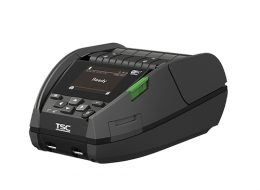
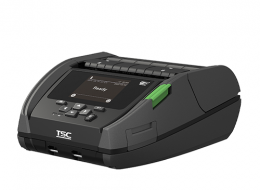
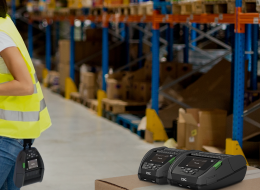
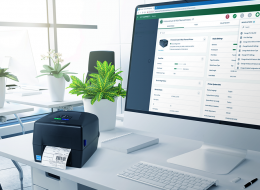
Typical desktop printers are stationary, requiring a fixed power connection to function. But what if you need immediate printing without being tied down to one location? Or if the designated printing station is too far away from the action? The solution is simple - the desktop printer needs to be movable. But how?
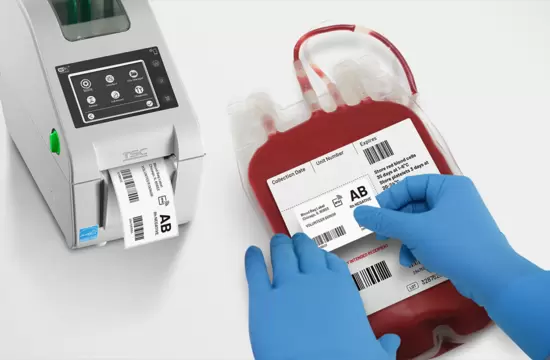
In modern medicine, blood transfusions are a vital procedure that saves countless lives every day. But the misidentification of patients or blood bags due to human error can turn a life-saving procedure into a fatal mistake. Consequently, many healthcare providers today are seeking to further enhance patient safety by adopting RFID wristbands and blood bag labels. But there are many different types of RFID, so which RFID is best for wristbands and blood bag labels?

Whether as a patient or a visitor, there’s a pretty good chance you've come across the now ubiquitous patient wristband at your last hospital visit. While now a routine part of healthcare operations, receiving hospital care and treatment before wristbands was fraught with human error, with potentially deadly results.
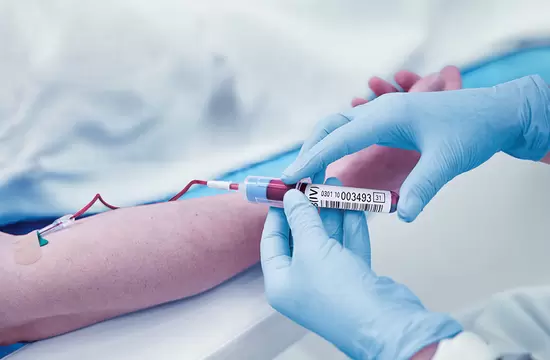
With the significant workforce constraints in hospitals, technology inevitably needs to evolve to streamline workflows. Healthcare professionals seek solutions to accelerate work processes and enhance point-of-care (POC) services to achieve patient-centric care. Point-of-Care Testing (POCT) refers to medical diagnostics performed at or near the site of patient care. It enables rapid test results, allowing doctors to make immediate and informed decisions regarding patient treatment. Reducing the time between diagnosis and treatment can lead to faster medical intervention and enhance patient outcomes efficiently and precisely.

Linerless is emerging as a favoured labelling solution. Whether in retail, logistics, healthcare, or beyond, enterprises are seeking a greener, more efficient labelling experience. Dive into our ultimate Q&A guide below to help you make informed decisions on integrating Linerless Labelling into your operations for sustainable and streamlined labelling.

In the healthcare industry, the medication administration process demands careful attention and high precision to prevent patient harm.

Businesses today actively seek ways to minimise their environmental impact and enhance workplace safety. One effective approach is transitioning from traditional labels to linerless labels.

Sustainability has emerged as a pivotal factor across numerous industries, driven by environmental protection and shifting consumer tastes. Businesses are progressively directing their attention towards sustainable strategies, encompassing endeavours like minimising carbon footprints, embracing eco-conscious materials, and integrating circular economy concepts. Sustainability arises significantly in the Automatic Identification and Data Capture (AIDC) industry, leading to a growing demand for more eco-friendly materials and solutions for labels, tags, and other AIDC offerings. Reducing carbon emissions is the key strategy for the AIDC industry to achieve carbon neutrality and support environmental sustainability.

As the world economy has decelerated since 2021, job markets in OECD countries remain strained. Despite employment rates returning to pre-pandemic levels and unemployment rates hitting their lowest since the early 1970s, a stark labour shortage persists due to a lack of qualified talent, highlighting a supply-demand imbalance.

A recent study from the CDC (Centres of Disease Control and Prevention) shows that the incidence of healthcare associated infections (HAIs) was elevated during periods of high COVID-19 hospitalisations; in 2021, standardised infection ratios were significantly higher than during the pre-pandemic period