



























Welcome to Our Blog
Get the latest information on new products and solutions, trending industry topics, best practices, tip and tricks, and much more.
Automotive
1429
/en/blog/automotive
Barcode Inspection
418
/en/blog/barcode-inspection
Cannabis
1430
/en/blog/cannabis
Company News
415
/en/taxonomy/term/415
Entertainment & Hospitality
1428
/en/blog/entertainment-hospitality
Events and Tradeshows
1421
/en/blog/events-and-tradeshows
Food & Beverage
1426
/en/blog/food-beverage
Healthcare
1425
/en/blog/healthcare
High Resolution
414
/en/blog/high-resolution
Industry Trends
1419
/en/blog/industry-trends
Manufacturing
1424
/en/blog/manufacturing
Mobile Printing
1420
/en/blog/mobile-printing
Remote Printer Management
1432
/en/blog/remote-printer-management
Retail
1423
/en/blog/retail
Retail
1435
/en/blog/retail-0
RFID
416
/en/blog/rfid
Software Solutions
1433
/en/blog/software-solutions
Standalone
419
/en/blog/standalone
Supplies
417
/en/taxonomy/term/417
Tips & Best Practices
1431
/en/blog/tips-best-practices
Transportation & Logistics
1422
/en/blog/transportation-logistics
Warehouse & Fulfillment
1427
/en/blog/warehouse-fulfillment
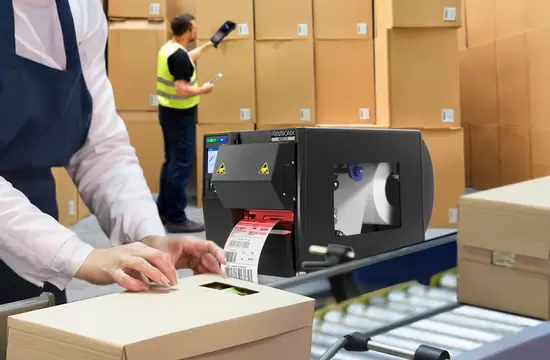
When a finished product leaves the production line, it typically marks the end of the manufacturing process. However, operationally speaking, it also marks the beginning of the inventory control process. This is the point where product information needs to be confirmed before the finished good moves into inventory.
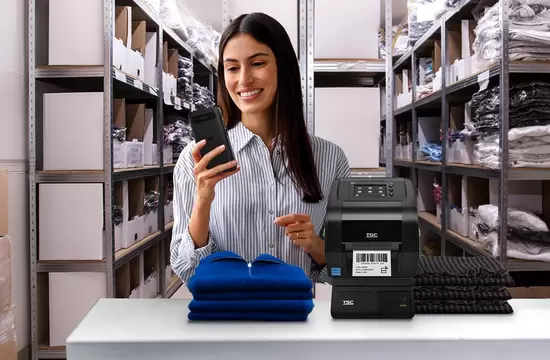
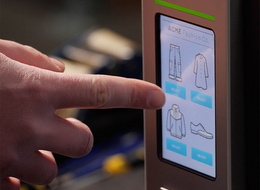
Inventory accuracy has always been important in retail. However, as omnichannel operations continue to evolve, knowing how much inventory is available is no longer enough. Retailers need timely and reliable visibility into where products are located, how they are moving, and whether inventory records accurately reflect actual stock.
With inventory distributed across warehouses, stores, fulfilment locations, and return channels, maintaining visibility becomes increasingly challenging. Delayed updates can lead to replenishment issues, excess safety stock, misplaced items, and inefficient manual verification processes.
Barcodes and RFID are both Auto-ID technologies used to track products, assets, and inventory across the supply chain. Both have their place — but the calculus is shifting. With the GS1 Sunrise 2027 deadline approaching, companies that haven't evaluated their barcode and RFID strategy are running out of runway.
The way the world identifies, tracks, and authenticates products is being rebuilt. Two forces are converging at once: the global retail and healthcare transition to 2D barcodes under GS1’s Sunrise 2027 initiative, and the accelerating shift to RAIN (UHF) RFID for item-level visibility. Companies that treat these as a future compliance chore will be reacting under deadline pressure. Companies that act now will turn the same investment into faster operations, lower shrink, and a data foundation their competitors won’t have.

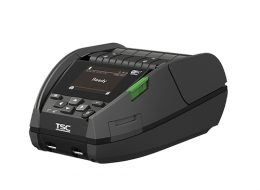
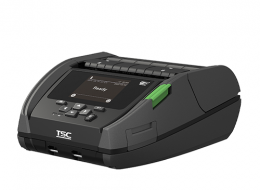
Typical desktop printers are stationary, requiring a fixed power connection to function. But what if you need immediate printing without being tied down to one location? Or if the designated printing station is too far away from the action? The solution is simple - the desktop printer needs to be movable. But how?
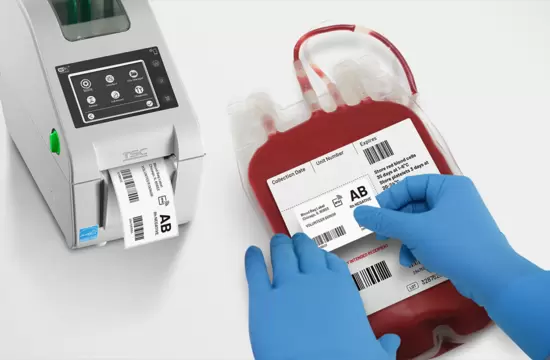
In modern medicine, blood transfusions are a vital procedure that saves countless lives every day. But the misidentification of patients or blood bags due to human error can turn a life-saving procedure into a fatal mistake. Consequently, many healthcare providers today are seeking to further enhance patient safety by adopting RFID wristbands and blood bag labels. But there are many different types of RFID, so which RFID is best for wristbands and blood bag labels?

In our interconnected digital world, businesses of all sizes - from local shops to global logistics firms and retail chains - rely on a vast network of connections to operate.

Whether as a patient or a visitor, there’s a pretty good chance you've come across the now ubiquitous patient wristband at your last hospital visit. While now a routine part of healthcare operations, receiving hospital care and treatment before wristbands was fraught with human error, with potentially deadly results.
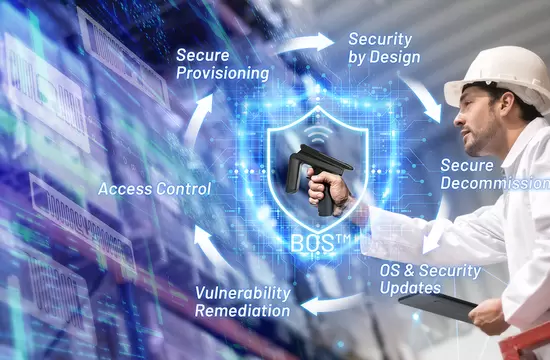
As more industries, from logistics and manufacturing to retail and healthcare, adopt increasingly more enterprise mobile computers (EMC), organisations face growing attack surfaces - not from the devices themselves, but from gaps in security and a lack of lifecycle management. Therefore, it is more important than ever to have a robust digital defence in place.
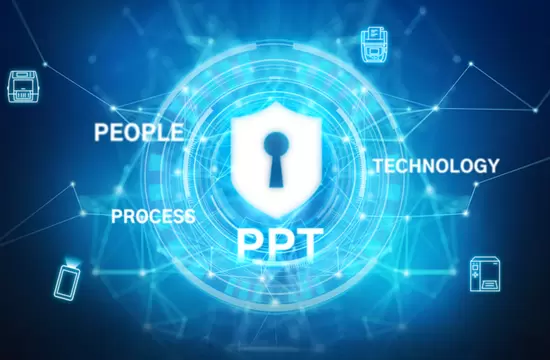
In our interconnected, digitalised world, cybersecurity isn't just an IT concern - it's a fundamental necessity. However, navigating through the multitude of security measures available and evolving threats can quickly become overwhelming. The good news is that the People, Process, and Technology (PPT) Framework can help you structure your thermal printer and enterprise mobile computer (EMC) security. That framework is built upon three pillars and is a holistic approach that extends beyond just the technical aspect of cybersecurity. It emphasises cybersecurity as an integrated part of your entire organisation. Here is a breakdown of the three pillars: