



























What’s the right RFID for patient wristbands and blood bag labels? UHF or HF?
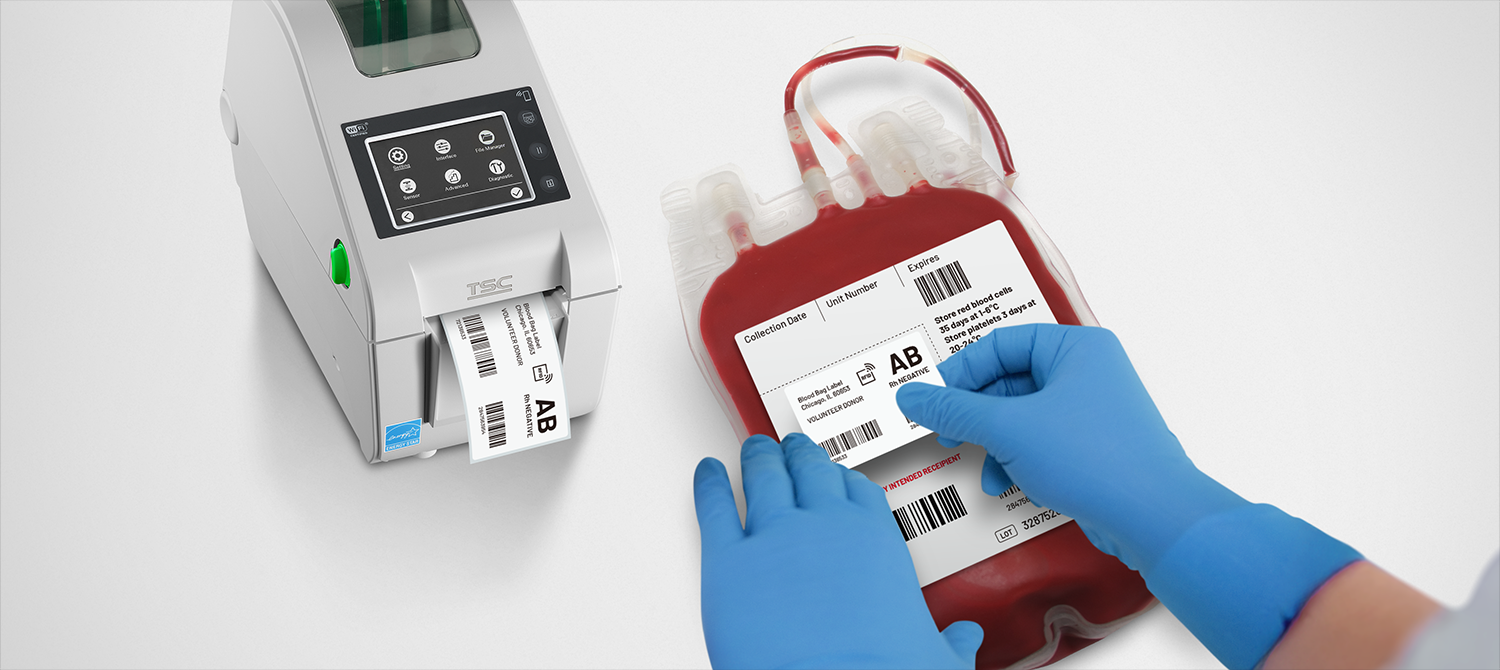
In modern medicine, blood transfusions are a vital procedure that saves countless lives every day. But the misidentification of patients or blood bags due to human error can turn a life-saving procedure into a fatal mistake. Consequently, many healthcare providers today are seeking to further enhance patient safety by adopting RFID wristbands and blood bag labels. But there are many different types of RFID, so which RFID is best for wristbands and blood bag labels?
Common Types of RFID Used for Healthcare Applications
The two most common types of RFID used in the Healthcare industry are RAIN RFID, based on UHF (Ultra High Frequency) radio waves and HF / NFC (High Frequency / Near Field Communication). Both have advantages and disadvantages associated with factors such as read-distance, how many tags can be read at one time, the material to which the tag is affixed, privacy and security concerns, etc.
For wristbands and blood bag labels, HF / NFC traditionally has been the better choice, all things considered.
HF as the More Practical Choice for Point-of-Care Patient Safety
Whether selecting RAIN RFID or HF / NFC ultimately depends on how the wristbands and labels will be used and what your priorities are. But when considering these factors, HF / NFC shines:
Reliability Around Liquids: HF RFID operates at 13.56 MHz, a frequency that is not as easily absorbed by water-based substances, compared with the higher frequencies of RAIN (860-960 MHz). This is a key advantage, as the human body and blood are mainly composed of water.
Patient Privacy: HF is a good fit for protecting patient privacy due to its short read range—ensuring data can only be accessed from close proximity, minimizing unauthorized scanning from a distance. HF also supports more robust and adopted security features, such as encrypted communication—ideal for protecting sensitive patient data.
Deliberate Verification: Short read range also helps reduce the risk of misidentification as near-field reading encourages deliberate, close-range interaction. This ensures healthcare providers are actively verifying patient identity and blood bags at the bedside—minimizing accidental reads.
At the end of the day, while UHF is suited for applications that require bulk scanning from a distance (e.g., patient tracking), HF is the preferred option for enhancing point-of-care patient safety.
Improve Patient Safety with 2-Inch DH Series 6.5-Inch OD Printers for Healthcare
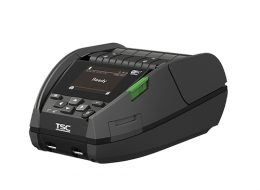
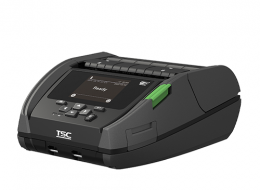
TSC Auto ID 2-inch DH220L Series RFID printers are compelling options for those looking to adopt HF RFID wristbands and blood bag labels. In addition to HF RFID functionality, they can accommodate larger 6.5-inch media rolls—reducing the frequency of roll changes, minimizing downtime. A media damper maintains a consistent amount of tension for reliable print quality despite the use of larger, heavier media rolls. The printers also support diverse media widths—from 60mm to 10mm—to produce a range of wristband and label sizes.
The printers also come with antimicrobial, easy-to-disinfect casings and IEC 60601-1 medical-grade compliant power supplies. Their modular designs future-proof your investment by allowing for the addition of Bluetooth or Wi-Fi + Bluetooth combo modules as well as a guillotine cutter kit.